
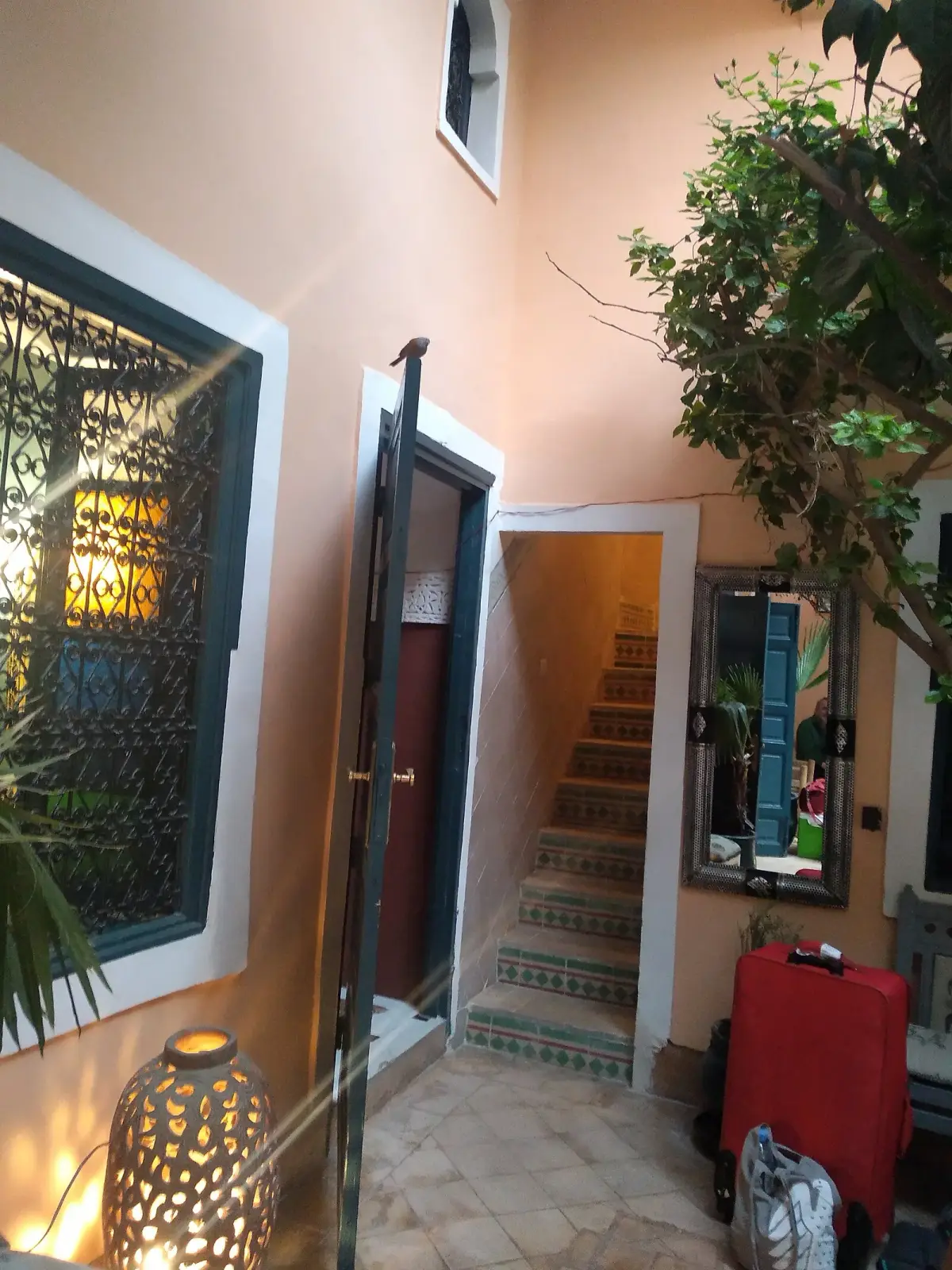
1. The misunderstanding: insuring a riad like an ordinary home
Most damage insurance policies rest on a sum declared by the insured, often pegged to the purchase price or a flat rate per square metre. For a standard apartment, the approximation holds more or less. For a riad or a heritage property of the medina, it almost always leads to an undervalued sum — because the logic of rebuilding a riad has nothing to do with that of an ordinary new build.
Let us first recall the general principle, valid for any property: you do not insure the market value (the resale value, land included), but the reinstatement value — the as-new value, or insurable value, that is the cost of rebuilding the building excluding land. This principle and its pitfalls are detailed in our reference article on home insurance and reinstatement value. The riad adds a difficulty to this principle: its reinstatement cost is specific.
2. Why rebuilding a riad costs more than a standard new build
A riad's value lies in its traditional works — and it is precisely these works that raise the cost of its reinstatement. Rebuilding like-for-like means calling on materials and an artisanal craftsmanship that do not belong to the ordinary building site:
- Zellige — mosaic of glazed tiles cut and laid by hand, in no way comparable to industrial tiling.
- Tadelakt — polished lime plaster, applied and smoothed by specialised craftsmen.
- Bejmat — traditional terracotta paving, laid piece by piece.
- Gebs (carved plaster) — friezes and screens worked on site by maâlems.
- Cedar woodwork — doors, painted ceilings, mashrabiyas, crafted joinery.
- The structure and the patios — thick walls, vaults, columns, organisation around a central patio, which require their own construction techniques.
Added to this are the scarcity of skilled labour, longer construction times, and the constrained access of properties in the heart of the medina (logistics, delivery of materials). All these items move the reinstatement cost of a riad away from the rate of a standard new home — often markedly upwards. It is this same singularity that explains why valuing a riad calls for a dedicated approach.
3. The insurance basis: as-new value, land excluded, like-for-like
The as-new value (insurable value) is defined as the reinstatement cost of the building, land excluded, increased where applicable by incidental costs: demolition, clearing, design fees, and — depending on the policy — rehousing costs. For a riad, the key phrase is “like-for-like”: it is not about rebuilding a building of equivalent area, but this building, with its traditional works.
This basis is technically foreign to market value: you quantify the reinstatement, not the market. The land — often a decisive share of the price of a sought-after medina property — never enters the insurance basis, since a loss does not destroy the land. To place this basis among the others, see our note on the RICS Red Book bases of value.
Like-for-like reinstatement and the constraints of the medina
Rebuilding a property located in a medina or of heritage interest may be framed by constraints of planning and protection (imposed materials, dimensions, authorisations, regulated site access). These obligations can raise the cost and lengthen the timeline of a reinstatement — which in turn weighs on the sum to be insured. The exact nature of these constraints depends on the property's status and the regulations in force: confirm them with the competent planning services, and check with your insurer what the “as-new value” cover actually includes for a heritage property.
4. Under-insurance: the number-one risk for a riad
This is the most concrete danger. There is under-insurance when the sum declared in the policy is lower than the real reinstatement cost. For a riad, several causes combine:
- A sum pegged to a standard new-build flat rate per m², which ignores the extra cost of the traditional works.
- A sum frozen at the purchase price, never revalued despite the rise in construction costs and the growing scarcity of artisanal labour.
- The omission of incidental costs (fine demolition, clearing in the medina, fees) that are part of the real reinstatement cost.
- Previous restoration works not reflected in the policy.
The penalty is often the average clause: many policies provide that, in case of under-insurance, the indemnity is reduced in the ratio between the declared value and the real value — including for a partial loss. On a riad insured at half its true reinstatement cost, the insured would receive only half of their damage, even a limited one. The exact terms fall under your policy: check these clauses with your insurer.
Have your riad valued at its true reinstatement cost by our RICS appraisal service, or reach us via the contact page.
5. Over-insurance: the flip side, when the land inflates the sum
The symmetric mistake exists too. A well-located riad in the medina can display a high market value driven by scarcity and location — its market value. To carry over this price as the sum insured is to include a share of location and land value that will never be indemnified: the loss carries away neither the land nor the address.
The result: a premium paid, year after year, on a basis part of which is useless. The right approach is neither to copy the purchase price nor the resale estimate — it is to quantify for itself the like-for-like reinstatement cost.
6. The method: the cost approach applied to an atypical fabric
Quantifying the reinstatement value of a riad is not done at a flat rate. It is a cost approach exercise, conducted work by work. The steps:
- Survey of the areas and volumes — fabric, patios, terraces, levels, distinct from the land footprint.
- Inventory of the traditional works — zellige, tadelakt, bejmat, gebs, cedar woodwork, ironwork: what will, or will not, be subject to like-for-like reinstatement.
- Construction method and level of finish — structure, vaults, second fix, artisanal finishes.
- Like-for-like reinstatement costs — at current conditions, including skilled labour and the medina's access constraints.
- Incidental costs — demolition, clearing, design fees, rehousing if the policy covers them.
- Land excluded — the value of the land never appears in the insurance basis.
The deliverable is a documented reinstatement sum — areas, inventory of works, cost assumptions, incidental costs — which serves to set or adjust the sum insured, and to support the discussion with the insurer. The value basis (here the insurable value) is formalised from the letter of engagement, in accordance with RICS standards.
7. When to have a riad's reinstatement value quantified — our reading
- At subscription, to start from a fair sum rather than a standard new-build flat rate that ignores the traditional works.
- After a restoration (redoing zellige, tadelakt, woodwork, structure): the sum must follow the real reinstatement cost, otherwise under-insurance sets in silently.
- Periodically, to track the rise in construction costs and the scarcity of artisanal labour — a frozen sum drifts mechanically towards under-insurance.
- Before bringing it into operation (guesthouse, riad-hotel): the insurance stake then adds to the value and yield questions studied for a boutique hotel in Marrakech.
In all these cases, a report compliant with RICS (Red Book) standards establishes the as-new value in a documented way, useful in discussing the sum insured with your insurer — from MAD 3,500 excl. tax, delivered in 5 to 8 days (48-72h express). To bear in mind: this is a private appraisal, intended to inform a decision and an amicable negotiation with the insurer, to support your position with third parties, not an act that would bind a court — in the event of litigation, the judge appoints the expert.
8. FAQ
Why does a riad cost more to rebuild than a standard new home?
Because you do not rebuild it in breeze block and industrial tiling. Rebuilding a riad like-for-like calls on materials and artisanal craftsmanship: hand-laid zellige, tadelakt, bejmat, carved plaster (gebs), cedar woodwork, traditional structure and patios. These items, and the skilled labour they require, raise the reinstatement cost compared with an ordinary new build — which must be reflected in the sum insured.
Should a riad be insured on its market value or its reinstatement value?
On the reinstatement value. In the event of a loss, you rebuild the fabric, you do not buy back the land. The insurance basis — as-new value, or insurable value — is the reinstatement cost of the building excluding land value, increased where applicable by incidental costs (demolition, clearing, fees). For a riad, this cost includes like-for-like reinstatement in traditional materials, which a standard flat rate ignores.
What is under-insurance and the average clause for a riad?
There is under-insurance when the declared sum is lower than the real reinstatement cost. This is a heightened risk for a riad, whose like-for-like reinstatement cost is often underestimated. Many policies then apply an average clause: the indemnity is reduced in the ratio between the declared value and the real value, even for a partial loss. The terms depend on your policy — confirm them with your insurer.
Is like-for-like reinstatement always possible in the medina?
Rebuilding a property in a medina or of heritage interest may be framed by heritage and planning constraints (materials, dimensions, authorisations, site access). These constraints can raise the cost and lengthen the timeline. The exact nature of the obligations depends on the property's status and the regulations in force: check with the competent planning services and your insurer what the cover includes.
How do you quantify the reinstatement value of a riad in Marrakech?
Through the cost approach applied to an atypical fabric: survey of the areas and traditional works (zellige, tadelakt, bejmat, gebs, woodwork, patios), construction method, like-for-like reinstatement costs at current conditions, then incidental costs (demolition, clearing, fees), land excluded. This is the work of a specialised appraisal: a report compliant with RICS (Red Book) standards establishes the as-new value in a documented way, from MAD 3,500 excl. tax, in 5 to 8 days (48-72h express), firm quote within 24h.
Is your riad insured at its true reinstatement cost?
RICS-certified experts — estimation of the like-for-like reinstatement value (as-new value, land excluded) of a riad or heritage property, to calibrate your sum insured and avoid both under- and over-insurance. Reports compliant with RICS (Red Book) standards in 5 to 8 days (48-72h express), across Morocco.
Note: The as-new value (insurable value) is defined by the RICS valuation standards as the as-new reinstatement cost of the building excluding land, increased by incidental costs; for a riad or heritage property, it includes like-for-like reinstatement in traditional materials. The covers, ceilings, deductibles, indemnity rules (including any average clause) and the medina reinstatement constraints fall under your policy and the regulations in force: confirm your situation with your insurer and the competent planning services. A private appraisal informs a decision and an amicable negotiation; it does not bind a court. To establish the reinstatement value of your property, see our real estate appraisal page or the blog.