
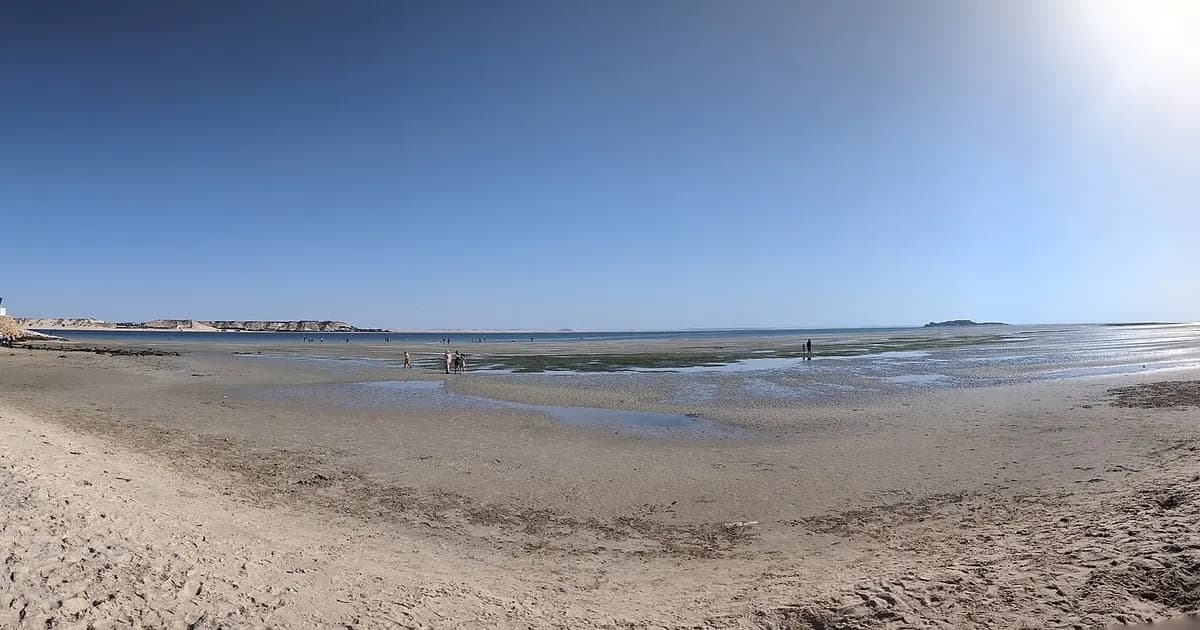
1. Why Dakhla is not a property market like the others
Most of the markets we cover — Casablanca, Rabat, Marrakech, the Doukkala coast — rest on melk land, common-law private ownership, freely transferable and abundantly documented by comparables. Dakhla follows a different logic: land in the region is overwhelmingly state-owned, private agreements between individuals are the exception, and price references are scarce because the market is emerging.
The direct consequence: you cannot transpose big-city reflexes here. The first question is not « how much is the square metre worth? » but « exactly which right are you acquiring? ». It is land status, far more than location, that drives value — a principle we set out in our overview of atypical Moroccan land statuses.
2. State land: public domain outside commerce, private domain transferable under conditions
State land covers two legal realities that must never be confused:
- The State's public domain (shoreline, dependencies assigned to common use) is, in principle, outside legal commerce: it is not sold, and its « value » is only assessed in specific contexts — takings, compensation. In Dakhla, whose appeal lies precisely in the lagoon front and the coast, this distinction is central: some of the most coveted land belongs to a domain that is not for sale.
- The State's private domain can be transferred — but under regulated administrative procedures, never by private agreement as between individuals. The transfer is conditional, subject to its own authorisations and timelines.
In practice, access to tourism land often runs less through an outright acquisition than through rights of use or long-term leases. What is then valued is not ownership of the ground but the right held — its duration, its conditions, its possible transferability. The same mechanics as for an asset whose operation runs through a long lease: you value the right, not the walls in full ownership.
3. What state-land status changes for value
On the valuation side, state-land status introduces a discount for conditions and timelines. As an order of magnitude observed in appraisal practice, a transfer of the State's private domain commonly carries a discount of the order of 10 to 20 % compared with an equivalent melk — a reflection of the uncertainty and timing of administrative procedures. This is not an official scale: the expert adjusts to the file and documents the uncertainty, in line with RICS Red Book standards, where appropriate as a value range.
The essential methodological point: in Dakhla, the value of a project often depends on administrative acts that are never secured in advance. The appraisal report must treat them as explicit assumptions, never as certainties. That is precisely the rigour that sets an independent appraisal apart from an optimistic estimate.
4. Valuing tourism land: potential before price
When the subject is land — the site of a future camp, lodge or residence — the valuation follows the logic we describe for any land in Morocco: it is not the raw area that makes value, but the buildable potential and authorised use. In Dakhla, two filters are added:
- The actual land status of the site (transferable State private domain, right of use, long-term lease), to be verified before any value assumption.
- The use and the development conditions applicable to the sector, which determine what can really be developed there — and therefore what the land can carry economically.
Until these two filters are cleared, talking about price per square metre makes little sense. Appraisal begins by securing the « what » and the « can we », before the « how much ».
Planning a project in Dakhla? Have the question of the right and the value settled first. Get an independent RICS appraisal from 3,500 MAD excl. tax, anywhere in Morocco.
5. Watersports tourism: a trading asset, not just walls
Dakhla's property economy is driven by watersports tourism: kitesurfing and water activities attract an international clientele that keeps camps, lodges and lagoon guesthouses alive. Now, an asset whose value depends on the activity carried on there is not valued like an apartment. This is the domain of RICS VPGA 4 (Valuation of trading property and businesses), which we apply to any hotel valuation in Morocco: value results jointly from the walls, the goodwill, the equipment and the clientele.
Concretely, the valuation of a kitesurf camp or a lodge is built from its income: occupancy rate, accommodation and watersports revenue, operating costs, operating margin. Two parameters are, in Dakhla, more decisive than elsewhere:
- The seasonality of the wind and of footfall, which dictates the real rhythm of revenue — an operation does not run twelve full months in the same way.
- Dependence on an international watersports clientele, more sensitive to transport conditions and context than the residential demand of a major city.
The report sets out these factors and, where uncertainty is high, expresses value as a range rather than a single misleading figure. It is the same discipline as for a hotel valued on RevPAR and GOP, transposed to a lagoon-side asset.
6. The Dakhla Atlantic port: context, not a figure
No article on Dakhla can ignore the Dakhla Atlantic portproject, a structuring piece of infrastructure regularly cited as a driver of regional development. The temptation is great to turn it into a valuation argument — « the port will lift everything ». Our position as experts is clear and cautious:
- A major piece of infrastructure can transform a market and create demand. It is a legitimate context factor to mention in the qualitative part of a report.
- But a serious valuation does not capitalise a promise. The value adopted rests on the current state of the asset, its trading and the comparables available — not on a future market projection, speculative by nature.
In other words: the port prospects illuminate the long-term potential and the expected liquidity of the asset, without entering the calculation as an invented percentage. Future uncertainty is treated explicitly; it is not quantified blind.
7. Buying in Dakhla from far away
Many buyers interested in Dakhla are foreign investors or Moroccans living abroad, drawn by the setting and the tourism potential. A non-MRE foreigner can acquire property in Morocco within the common-law framework. In Dakhla, the state-land dimension of much of the land adds an unavoidable layer of verification:
- The exact status of the plot: public domain (not transferable), State private domain (transferable under conditions), right of use, long-term lease.
- The precise nature of the right transferred and its duration, transferability and renewal conditions.
- The value of the right actually acquired — not that of a phantom full ownership.
In an emerging market where comparables are scarce and land is complex, an independent appraisal and an upfront title check are not a luxury: they are the two safeguards against buying a poorly-understood right at a full-ownership price.
8. FAQ
Can you buy land in full ownership in Dakhla?
Land in the region is overwhelmingly state-owned. The State's public domain (shoreline, dependencies assigned to common use) is outside legal commerce and is not sold. The State's private domain can be transferred, but under regulated administrative procedures — never by private agreement — and access to land often runs through long-term leases. Have the land status and the nature of the right verified before any commitment.
How does state-land status affect value?
What is valued is not always full ownership but the right held: a conditional transfer of the State's private domain, or a right of use arising from a long-term lease. A transfer of the State's private domain commonly carries a discount of the order of 10 to 20 %, reflecting the conditions and timelines of procedures. The expert documents these conditions as assumptions, in line with RICS standards.
How is a kitesurf lodge or camp valued?
As a trading asset. The reference method is RICS VPGA 4 (Valuation of trading property and businesses): the asset is valued from its income — occupancy, accommodation and watersports revenue, costs, margin. The seasonality of the wind and dependence on an international watersports clientele are central; where uncertainty is high, value is expressed as a range.
Can a non-resident foreigner invest in Dakhla?
Yes, within the common-law framework applicable to non-MRE foreigners, taking account of the specifics of local land. The state-land dimension adds verification: status of the plot, nature of the right (transferred ownership, use, long-term lease), administrative conditions. An independent appraisal and an upfront title check are all the more useful as the market is emerging.
Should the Dakhla Atlantic port project be factored into the valuation?
With caution. A structuring piece of infrastructure can transform a market, but a serious valuation rests on observed evidence, not on projections. The report may mention the port prospects as qualitative context, without deriving a figure from it: value relies on the current state of the asset, its trading and the comparables available, with future uncertainty treated explicitly.
A project in Dakhla? Settle the question of the right and the value first.
RICS-certified experts — appraisal report on state land, the right acquired and the trading value of tourism assets, within 5 to 8 days (48-72 h express). From 3,500 MAD excl. tax, anywhere in Morocco.
Note: This article describes general principles of valuation and land law. State-land status (public domain outside commerce, State private domain transferable under conditions), the nature and duration of rights, and the applicable procedures are governed by the regulations in force and the situation specific to each plot: confirm your case with your notary and the competent administration. No price or market projection is advanced. To document the right acquired and the value of your property, see our real estate appraisal page or the blog.