
Methodology · Commercial Assets
Regional Malls Valuation in Morocco — DCF, Cap Rate, RICS Methods
A regional mall carries several billion MAD on the asset side; the gap between two valuation methods can represent hundreds of millions. Here is how our RICS-certified experts build a defensible value — without citing a single unpublished market figure.
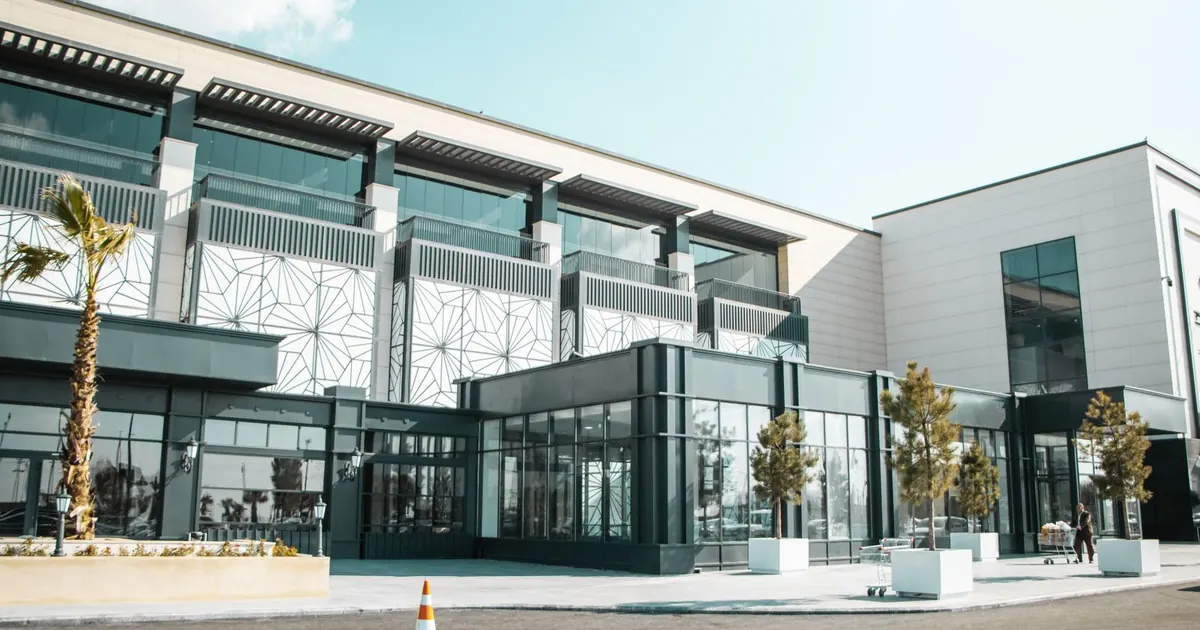
What we call a "regional mall" in Morocco
International typology (ULI, ICSC) distinguishes the neighborhood center (2,000-15,000 sqm GLA, local catchment), the community center (15,000-40,000 sqm), the regional mall (40,000-80,000 sqm with 1-2 anchors and a cinema), and the super-regional mall (above 80,000 sqm GLA). In Morocco, the large urban malls — Casablanca, Marrakech, Rabat, Tangier, Fez, Agadir — typically fall into the regional to super-regional category, often anchored by a hypermarket, a multiplex cinema and organised food court dining.
This typology is not cosmetic: it drives the economic model (revenues dominated by fixed rents vs. turnover-based variable rents), the expected tenant mix, the reference catchment area, and therefore the valuation method to prioritise.
Main method: DCF on stabilised rental income
For a regional mall, Discounted Cash Flow is the king method — recognised by the RICS Red Book (VPGA 5) for investment assets. The principle: project rental cash flows over 10 years (sometimes 15), apply a terminal value at exit cap rate, discount at a rate that reflects risk.
Model inputs come from a granular reading of the rent roll (each lease scanned: tenant, occupied GLA, minimum guaranteed rent, potential variable rent, expiry, renewal options, deposits, recoverable charges). Reversion assumptions at lease end — renew at the same level, uplift, or lose the tenant — are justified tenant by tenant, anchor by anchor.
Complementary method: Yield Analysis and direct capitalisation
Direct capitalisation (stabilised NOI ÷ cap rate) serves as a DCF sanity check when NOI is stable and the mall is "mature". It never replaces DCF for a complex asset, but it quickly illuminates the result when the retained cap rate deviates from market.
The comparative method (Sales Comparison) remains marginal in Morocco: public transactions on regional malls are rare, and when prices are announced, they often include goodwill or unadjusted premiums. It provides an order-of-magnitude sense, never a main method.
Key assumptions — where value is made or lost
- Target occupancy: different from current if the mall is in ramp-up or in gradual decline.
- Rent growth: contractual indexation, market reversion, push capacity on anchors vs. small tenants.
- Non-recoverable charges: landlord costs (mall marketing, recurrent capex, active management fees).
- Planned capex: façade refresh, HVAC upgrade, food court repositioning, expansion. Every line item in the DCF, none ignored.
- Exit cap rate: justified by (rare) comparables + international benchmark + country risk premium + local liquidity premium.
- Discount rate: cap rate + implied growth + residual development premium. Documented line by line.
Common biases in mall valuation
Bias 1 — extrapolating anchor rents. A hypermarket often signs a long lease at a modest minimum guaranteed rent with rare variable rent: treating its rent as recurring revenue at the level of small tenants systematically overstates NOI.
Bias 2 — ignoring negative reversion. A struggling tenant that renews at market lowers rent. Assuming "renewal at current level" inflates future cash flows.
Bias 3 — imported cap rate without adjustment. A European cap rate applied as-is to a Moroccan mall underestimates risk and overstates the asset by hundreds of millions.
Bias 4 — underestimated capex. A mall gets refreshed every 7-10 years. A DCF model that ignores re-marketing capex artificially inflates NAV.
Typical case — methodology applied
Anonymised case handled by our team: peripheral mall in a regional capital, GLA around 30,000 sqm, one food anchor, organised restaurant offer, occupancy below maturity threshold (typical post-delivery context). Our expertise separated two scenarios: a stabilised scenario (target occupancy and rents reverted to market over 3 years), and a stress scenario (loss of third anchor, repositioning capex). The retained value is weighted between the two, with a sensitivity range of ±50 bps on cap rate that bounds uncertainty. The report documents every assumption and lets the investment committee recalibrate if needed.
What a RICS-compliant mall expertise report contains
- Scope, basis of value (VPGA 5), effective date and special assumptions.
- Physical and legal description of the asset (title deed, easements, permits).
- Analysis of the local retail market (catchment, direct competition, trends).
- Detailed rent roll + analysis of main leases and their reversion.
- Full DCF model (justified assumptions, sensitivities).
- Comparative sales cross-check + direct capitalisation.
- Retained value + confidence range.
- Technical annexes: photos, schematics, title deed extracts, sensitivity curves.
Why an independent expertise — rather than in-house valuation
Investor, developer, fund or bank, the temptation to keep valuation in-house is strong. Three reasons to externalise it:
- Neutrality vis-à-vis stakeholders — contribution in kind, partial disposal, credit committee: external value is accepted where internal value is contested.
- IFRS 13 compliance for REITs and OPCI — periodic external fair value is required by auditors.
- Method gap defence — when two internal valuations diverge (entry vs. exit of an investor, contribution vs. disposal), a trusted third party unlocks the discussion.
Cost, timeline, scope
Our commercial asset expertise engagements start at 3,500 MAD net of tax for simple assets and are quoted on a bespoke basis for regional malls, depending on documentation volume, number of leases to analyse and audit depth. Firm quote within 24 hours, report delivered in 10-15 days for a standard regional mall. Our teams operate in Casablanca, Rabat, Marrakech, Tangier, Fez and Agadir.
Go further
- See our dedicated service: retail property valuation in Morocco (methods, scope, fees).
- Back to the real estate blog.
- French version: Évaluation des malls régionaux au Maroc — DCF, cap rate.
Need a mall expertise?
Our RICS-certified team responds within 24 hours with a firm quote. Full expertise report in 10-15 days. Casablanca, Rabat, Marrakech, Tangier, Fez, Agadir.