
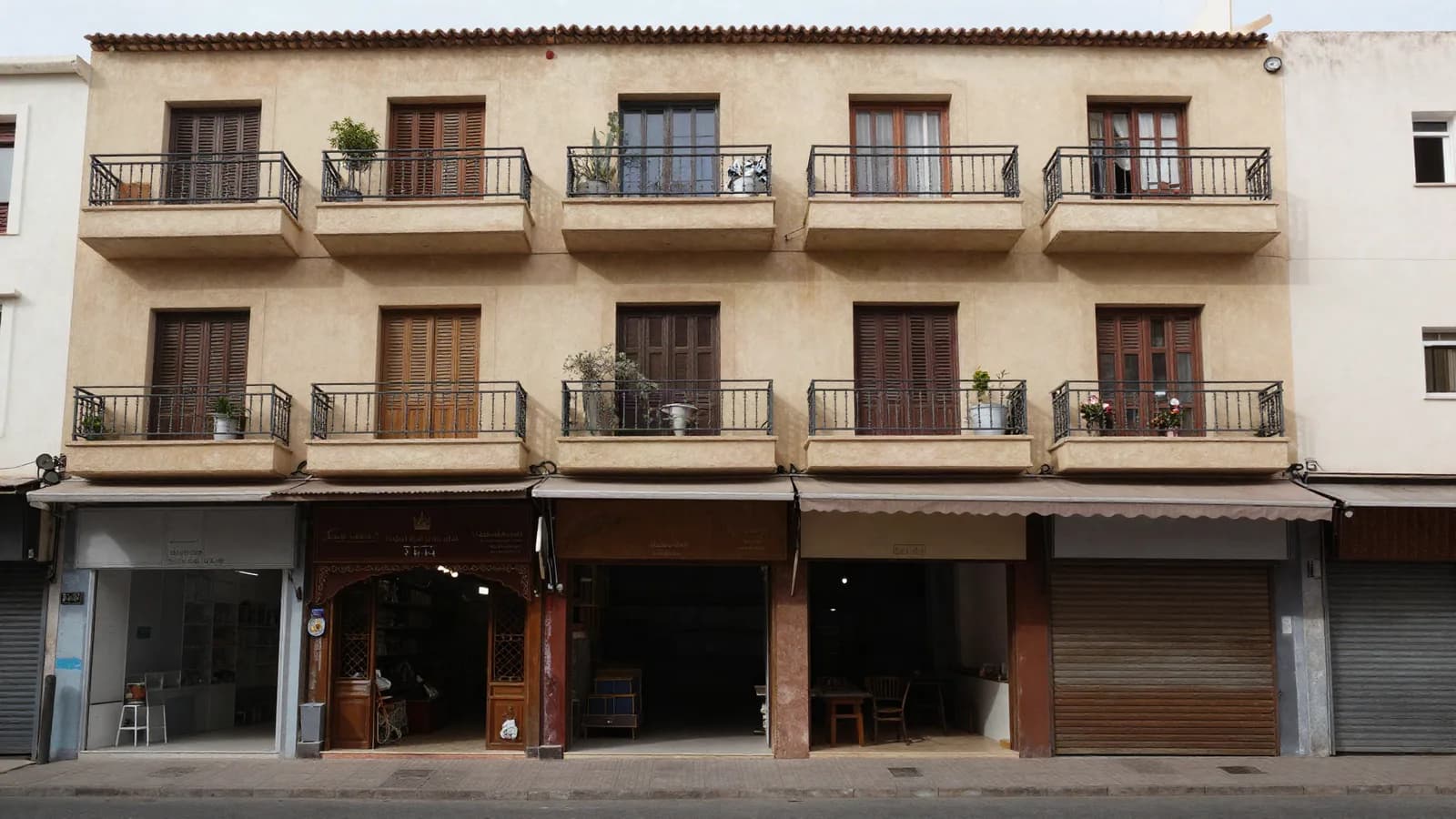
1. Two markets in one building
A shop and a flat do not follow the same logic. A shop is worth its location: the street, passing trade, visibility, frontage, the activity it can host. A flat is worth its comfort: size, floor, aspect, condition, residential neighbourhood.
One building can therefore combine a highly sought-after ground floor with ordinary upper floors, or the reverse. That rules out applying an average price per square metre across the whole area. The appraiser separates the components before putting them back together.
For buildings of this type, see also our page on valuing a mixed commercial and residential building.
2. Step 1: describe the building unit by unit
Before any calculation, the report draws up a schedule of the building: each shop, each flat, with its area, floor, condition, occupant and rent if let.
| Item recorded | Why it matters |
|---|---|
| Area of each unit | Basis of any comparison or capitalisation. |
| Occupation (let, owner-occupied, vacant) | Determines income and the buyer's freedom. |
| Rent and lease date | Allows the rent to be judged against the market. |
| Activity carried on in the shops | An activity can limit resale or re-letting. |
| Condition of structure, facade and common areas | Weighs on every unit. |
| Permits (shops, flats, floors) | An unauthorised part changes the basis of valuation. |
This schedule avoids the classic mistake: applying one method to the whole building because it is sold in one piece.
3. Step 2: the shops, valued on income
A commercial unit is most often sold for what it earns. The appraiser uses the rent: that of the current lease if it is in line with the market, otherwise the rent the unit would obtain today, based on comparable lettings in the same street or district. He then capitalises that rent, after non-recoverable costs and vacancy, at a rate drawn from the market.
The rate is not taken from a fixed table: it is justified by sales of comparable units, and the report states where it comes from. For points specific to shops, see our retail property valuation page.
4. Step 3: the flats, comparison or income
For the flats, two readings are possible and the appraiser chooses according to use:
- By comparison, if the flats could be sold or owner-occupied: compared with sales of similar flats in the district, adjusted for floor, condition and size.
- By income, if they are let or meant to be: the rent is capitalised, as for the shops.
In an income building, capitalisation dominates, and it is useful to set it against the comparison to check that they do not diverge without reason.
5. Existing leases: what weighs on the value
A building sold let is not sold like an empty one. The report reviews each lease:
- The rent against the market: a rent well below it limits income, a rent above it may not last.
- Term and renewal conditions, especially for shops, where the tenant is protected: see our guide to the commercial lease.
- The tenant's length of occupation and the use of the unit, which condition the ability to re-let or change activity.
- Vacant units or units occupied by the family, valued at market rent but with the delay and cost of putting them on the market.
The report does not invent these items: it asks for the leases and rent receipts, and flags any it could not consult.
6. The total, and consistency with a sale of the whole
Once each component is valued, the appraiser adds them up. He then checks that the total is reasonable for a buyer of the whole building. An investor thinks in terms of the building's overall income: if the sum of the parts gives a yield that matches no comparable sale of a building, the reason has to be understood.
Two typical situations: a very well located building with very low rents, or a building with a vacant shop. In each case the report explains what the buyer takes on (rents to catch up, vacancy to fill) and draws a single value, argued.
Any gap between the sum of units sold separately and the value of the building sold as a whole must also be explained, because it depends on whether selling unit by unit is really possible.
7. Single title or condominium: what changes
The legal status determines what can be sold. If the building is under a single title and belongs to one owner (or to undivided co-owners), it is sold whole; splitting it into units requires a prior procedure. If it is already a condominium, each unit has its own title and can be sold separately, with common areas and charges to share.
For the appraiser the consequence is practical: with a single title the natural assumption is a sale of the whole; with a condominium the condition of the common areas, the charges and their payment must also be examined. See our condominium guide for the general framework.
8. What changes the value, in short
- A more or less sought-after commercial location.
- Rents below or above market.
- Vacant shops or flats.
- Parts of the building that do not match the permit.
- Condition of the facade, structure and waterproofing.
- A single title or a condominium regime.
The report addresses each of these in writing, with no flat percentage: the effect of each item is measured on observed sales or rents.
9. FAQ
Can a mixed-use building be valued at an average price per square metre?
No. Shops and flats are valued differently: the former on rent and location, the latter by comparison or income. A single average hides those gaps. The appraiser values each component, adds them up, then checks the total.
Does a shop let at a low rent reduce the building's value?
It limits current income, hence the value by capitalisation. The exact effect depends on the lease term, the ability to revise the rent and the market for the unit. The report describes these before concluding.
Should the whole building or each unit be valued?
Both readings are possible. Under a single title the building is sold whole and the reference value is that of the whole. In a condominium each unit can be sold separately. The appraiser states which applies to your situation.
Does a floor added without a permit enter the value?
The report describes the gap between what exists and what was authorised and values on a written basis, generally the property as authorised, with the existing part shown separately. See our article on non-compliant construction.
What does a building valuation cost?
The quote is issued within 24 hours and depends on the size of the building and the number of units. The report is delivered in 5 to 8 working days, express in 48 to 72 hours. For commercial units, fees start at 5,500 MAD excl. tax.
A mixed-use building to sell, split or buy? Have it valued component by component.
RICS-certified experts. Income from shops, flats by comparison or income, leases reviewed, a single argued value. Report in 5 to 8 working days, quote within 24 hours.
Note: This article is methodological. The legal regime of your building (single title, condominium) and your leases should be confirmed with a notary. ReaConsult provides independent, non-judicial valuations: a report documents a value and binds no one.