
1. What we mean by an older city-centre apartment
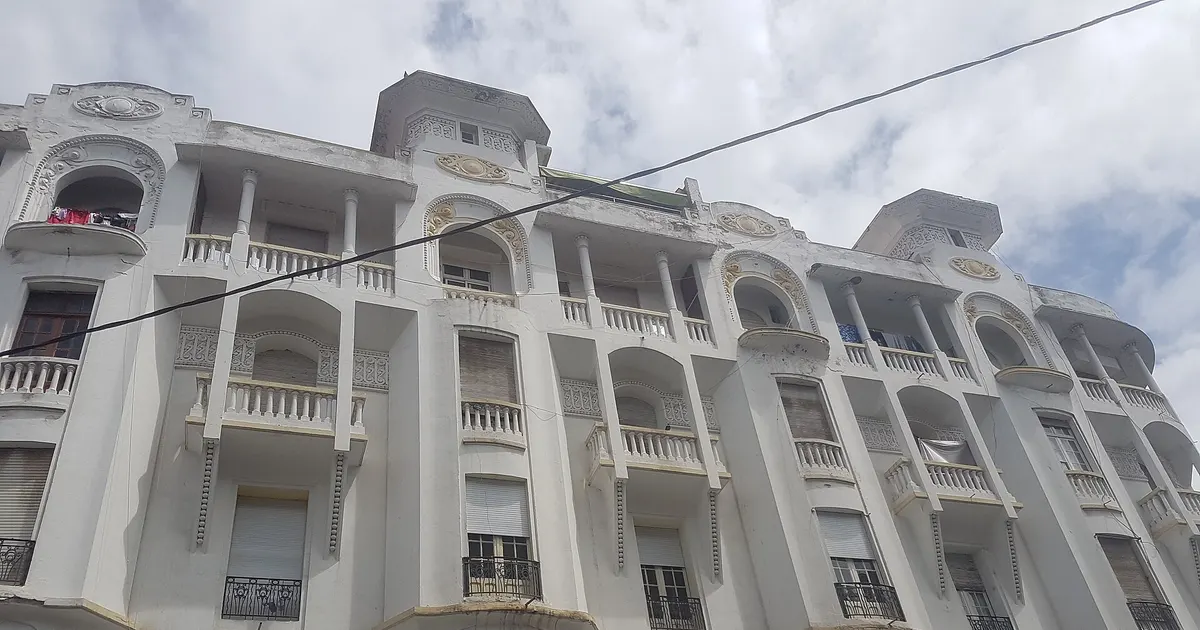
In several large Moroccan cities, the centre consists of buildings put up over the twentieth century, some of high architectural quality. In Casablanca, the Art Deco buildings of the city centre are the best-known example: detailed façades, generous ceiling heights, balconies, carefully made staircases. Buildings of the same age exist in Rabat, Tangier and elsewhere.
These apartments share some traits. They are large, with high ceilings, with a room layout designed for another way of living. They sit in well-served districts, close to shops, public offices and transport. But the building is old, the condominium is not always well organised, and the equipment no longer matches current standards. For a specific case, see our article on valuing an Art Deco property in central Casablanca.
2. Volumes: an asset that is not always paid for pro rata
Large volumes are the first selling point: generous area, high ceilings, reception rooms. But the larger the unit, the fewer the buyers able to afford the total price. The price per square metre of a large older apartment is therefore not that of a small recent flat in the same area, and may be lower.
One must also look at what the volumes really deliver. A suite of rooms leading one into another, long corridors or dark rooms give less usable area than the plan suggests. The valuer separates total area from truly usable area, and compares with properties whose layout is close. A comparable of the same size but with a very different plan is not a good comparable.
High ceilings cut both ways: they appeal at purchase, but make heating, cooling and upkeep costlier. The market values them according to the district's clientele: they count more for buyers seeking character than for investors seeking yield.
3. Lift, parking, facilities: what is missing comes off the price
Many older buildings have no lift, or an old and unreliable one. They have no parking, or a few unevenly allocated spaces. They have no organised caretaking. These gaps mainly affect upper floors, which sell less well without a lift, whereas they are the most sought-after in a recent building.
The valuer accounts for these by adjusting between comparables: a third-floor walk-up is compared with walk-ups in the same position, not with lift-served flats. Likewise, parking in the neighbourhood is a concrete purchase criterion: in a dense city centre, the absence of a parking space weighs on demand.
- Floor and access: the same apartment is worth different amounts on the first and fourth floor without a lift.
- Parking: right to a space, basement garage, or no solution in the building.
- Facilities: heating, hot water, electrics, plumbing. The valuer describes apparent condition; no diagnostic is carried out.
- Security and access: entrance door, entry phone, caretaker.
4. The building: common parts and the condominium
In an older lot, value depends on the building as much as on the flat. Façade, roof, staircase, shared pipework, the lift if there is one: their condition is partly visible at inspection, and it determines the works the owners will have to fund. A lot in good order in a neglected building sells less well than an equivalent lot in a maintained one.
The condominium itself may be poorly organised: old or missing bylaws, an inactive managing agent, unpaid charges, irregular general meetings. These situations complicate voting on works and weigh on buyers. The valuer asks for the documents available (bylaws, recent minutes, statement of charges) and reads them. See our article on the content of condominium bylaws.
When documents are missing, the report says so and states explicit assumptions. It does not fill a gap with a claim it cannot verify.
5. How the valuer adjusts: sales in comparable buildings
The comparison method remains the best fit. But for an older city-centre apartment, the relevant comparable is a flat in a building of the same type, same period and same level of upkeep, sold in the same area. Comparing with a recent flat in a residential district would require adjustments so heavy that they would undermine the result.
| Item to adjust | What the valuer notes | How it is reflected |
|---|---|---|
| Volumes and layout | Total area, usable area, ceiling height, plan | Comparables with a close plan; reasoned differences |
| Floor, lift | Level, existence and state of the lift | Comparables with the same access |
| Parking | Space, garage or none | Gap between comparables with and without parking |
| Condition of the lot | Floors, walls, kitchen, bathroom, joinery (apparent condition) | Refurbishment cost estimated under explicit assumptions |
| Condition of the building | Façade, staircase, common parts, works mentioned | Adjustment according to the scale of works to expect |
| Condominium | Bylaws, charges, arrears, minutes | Allowance for risk and management cost |
Each line is explained in the report. For refurbishment cost, the valuer works from what is visible and from clearly stated assumptions, never from a technical diagnostic: if the client needs a survey of the structure, that belongs to another professional. On the balance between price and works, see also our article on buying an older property.
6. When the file is incomplete: what the valuer writes
In older stock, an incomplete file is common: the original plan cannot be found, the condominium bylaws were never updated, works done by a former occupant left no written trace, the advertised area differs from the real one. These gaps do not block the valuation, but they show in the report.
The valuer states what was seen, what was read and what could not be verified. Every assumption used to fill a gap is written down, with its effect on value. If a point must be cleared before a sale or a division, for example the regularity of an interior alteration or the existence of a permit, the report flags it so that the owner has it checked with the right party. An honest value is one whose limits are known.
For an heir or a buyer discovering the building, this transparency is valuable: it allows negotiation on clear grounds, rather than finding out afterwards what the price should have included.
7. Common mistakes
- Pricing character at new-build prices: the charm of an old building is real, but it does not automatically offset the lack of a lift or parking.
- Applying the price per m² of a recent district to a city-centre apartment, or the reverse.
- Ignoring the state of the building because the flat has been redone: façade and roof are paid for collectively.
- Underestimating the condominium: an absent managing agent or unpaid charges translate into postponed works.
- Trusting an asking price: in older stock the gap between asking and selling price can be wide; only completed sales count.
8. What ReaConsult delivers for an older apartment
Our RICS-certified valuers inspect the lot and record the apparent condition of the flat and the accessible common parts. They gather the available ownership and condominium documents, assemble a set of sales of flats in buildings of the same type, detail the adjustments and conclude on a single, reasoned and verifiable value. Fees from MAD 3,500 excl. VAT for an apartment, firm quote within 24 hours, report in 5 to 8 working days. See our apartment valuation page.
9. FAQ
Is an older city-centre apartment worth less than a recent one?
It depends on the area and on what is compared. Address and volumes favour the older flat; the lack of a lift or parking and the state of the common parts count against it. Only comparable sales in the same area can put a figure on the gap.
Does the lack of a lift lower the value?
Generally yes, especially on upper floors. How much depends on the district and the target buyer. The valuer assesses it by comparing with flats in the same access situation.
Does the valuer carry out a technical survey of the building?
No. The valuer describes the apparent condition of the lot and of the visible common parts, and states assumptions about refurbishment cost. A structural survey belongs to another professional.
Does a poorly organised condominium weigh on the price?
Yes. Old or missing bylaws, an inactive managing agent, unpaid charges: these make works harder to vote and worry buyers. The valuer reads the documents available and states assumptions where they are missing.
How long does the valuation of an older apartment take?
The report is delivered in 5 to 8 working days, or in 48-72 hours express with a surcharge. Fees start at MAD 3,500 excl. VAT for an apartment, with a firm quote within 24 hours.
An older city-centre apartment? Measure what the address and the building are really worth.
RICS-certified valuers: lot inspection, reading of condominium documents, sales in comparable buildings, one reasoned value. Quote within 24 hours, report in 5 to 8 working days.
Note: this article sets out a method; it gives no discount or price per m², because these vary with city, district and building. The valuation describes apparent condition and does not replace a technical survey. See also our property valuation service.