
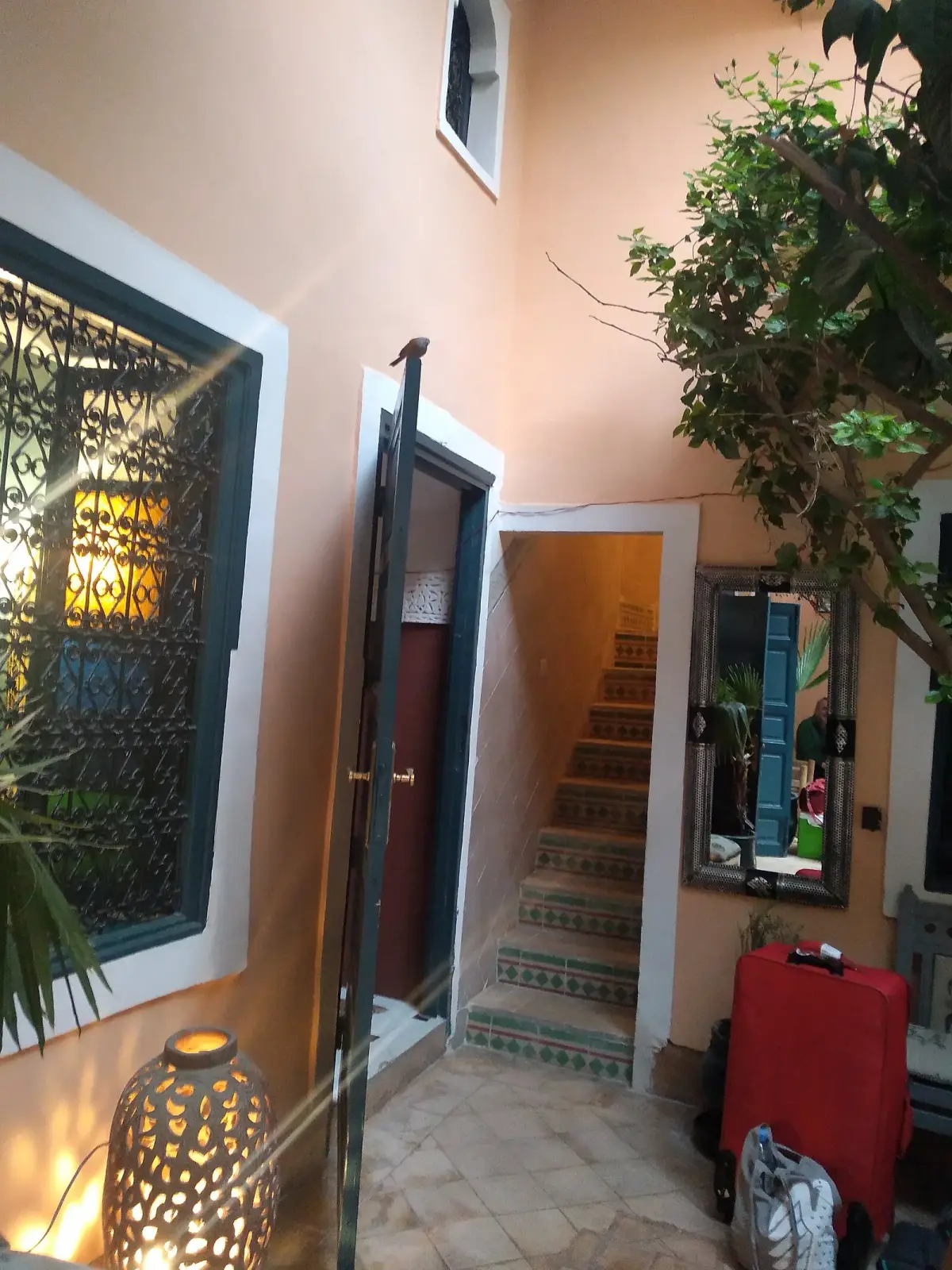
Pitfall 1 — structural condition hidden by cosmetic renovation
Medina houses are old buildings constructed with traditional materials — thick earthen and masonry walls, timber and steel floor structures, lime renders — that behave nothing like modern concrete construction. The pathologies that matter most are precisely the ones a fresh renovation conceals:
- Rising damp in thick walls, repainted over shortly before sale, re-emerging within months.
- Roof terraces with failed or improvised waterproofing — the single most common source of expensive post-purchase surprises.
- Party walls shared with neighbouring houses, where movement, damp or building work next door directly affects your structure.
- "Renovated" riads where the money went into tadelakt, zellige and photography rather than drainage, structure and waterproofing.
A professional inspection reads the building past the finishes: it documents observable condition, flags the points that need an architect's or engineer's deeper investigation, and prices the property accordingly. On riads, condition findings change negotiations more often than market evidence does.
Pitfall 2 — the title question: titre foncier or melkia?
A significant share of medina property is not held under a registered titre foncier but under traditional, unregistered ownership commonly called melkia, evidenced by adoul-drawn deeds sometimes generations old. Buying melkia property is possible but is a fundamentally different legal exercise: ownership chains must be reconstructed, heirs' rights checked, and the property ideally brought into the land registration system — work that belongs to your notary and takes time. The valuation's role is to identify the title status immediately, reflect the risk and the cost of regularisation in the value conclusion, and make sure you never discover the word melkia for the first time at the signing table. For the general framework, see our note on land registration in Morocco.
Found a riad and want it inspected and valued before you commit?
💬 Chat with a RICS-certified expert on WhatsAppPitfall 3 — pricing anchored to your wallet, not the market
The Marrakech riad market is one of the few segments in Morocco priced primarily for international buyers. Asking prices are anchored to what a European or American budget will bear, dressed in euro-per-square-metre comparisons with Provence or Andalusia. Meanwhile the actual comparable evidence — what riads of similar size, location and condition have genuinely traded at — tells a different story that a foreign buyer cannot see from abroad. An independent valuation rebuilds the price from medina evidence: derb by derb location analysis (access width, distance to a car-accessible point, neighbourhood character), realistic surface measurement, condition adjustment, and genuine comparables. The resulting figure is your negotiating floor — and it is frequently a long way below the asking price.
Pitfall 4 — the guesthouse revenue story
"It pays for itself as a maison d'hôtes" is the most common justification for an ambitious riad price. Treat it as a claim to be tested, not a fact:
- Operating a guesthouse requires authorisation from the competent local authorities, and classification requirements apply — the existence of a booking-platform listing does not prove the property is properly licensed. Verify the licensing position with your notary or counsel before pricing any income into your offer.
- The Marrakech guesthouse market is deep and highly competitive; occupancy and rates achieved by an established, well-marketed house tell you little about what a new operator will achieve in year one.
- Real operating costs — staff, maintenance of an old building, platform commissions, marketing — are routinely absent from the seller's arithmetic.
Where trading income is genuinely part of the case, the valuation approaches the riad as a trading asset and tests projections against observed evidence. Where it is decoration on a residential sale, the valuation says so.
What the pre-purchase valuation delivers
A signed English-language report covering value with auditable comparable evidence, title status and the points your notary must clear, documented condition observations with photographs, and — where relevant — an opinion on the income story. The process runs entirely from abroad: see our foreign buyer's valuation guide for the step-by-step. Fees start from MAD 3,500 net of tax (~£280 / ~€330); riads are quoted case by case with a firm written quote within 24 hours. ReaConsult — founded 2019, RICS-certified experts, 5,000+ appraisals, client reviews published on Google — has a local presence in Marrakech and no brokerage interest in any property we value.
Before the deposit, get the evidence
Send us the listing. Our Marrakech team inspects, our RICS-certified experts value, and you receive a signed English report — usually within two working weeks.