
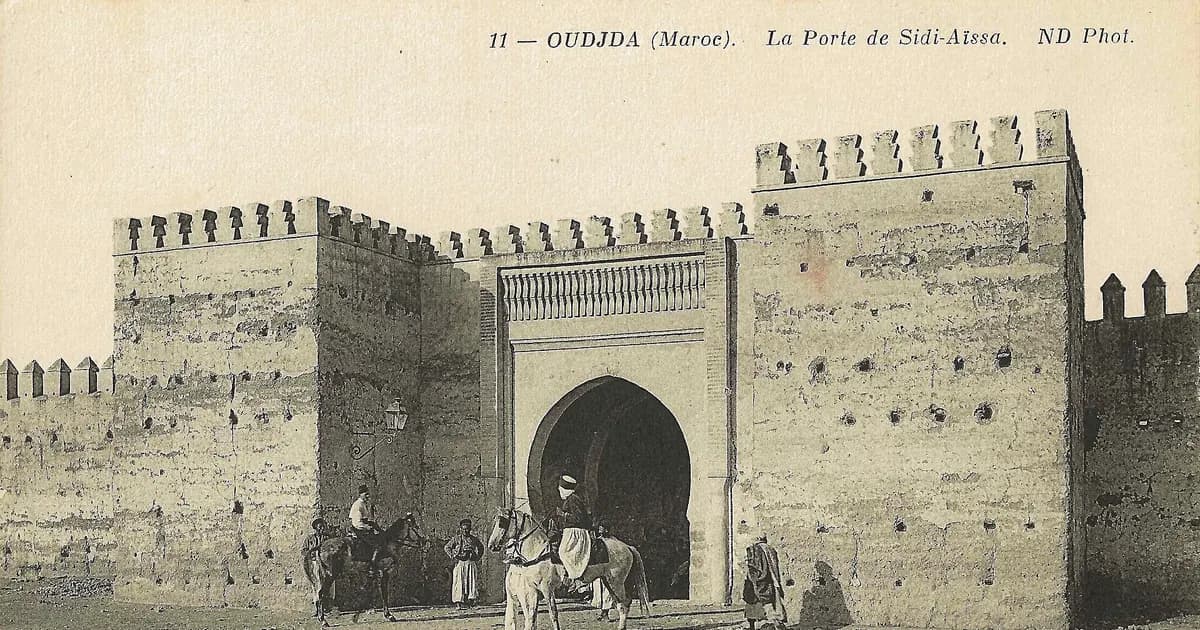
No price per square metre, rate or yield for Oujda appears on this page, and none is implied. On a market this thin and this seasonal, a district average quoted without a source would mislead a remote owner rather than help him — which is precisely the trap this page exists to describe. The subject is the sequence of checks that has to come first.
1. What actually drives this market
Oujda is a regional administrative and university capital — the seat of the Oriental region and of Mohammed I University — served by Oujda-Angad airport and connected to the national rail network. Activity zones have been developed around the town, the Oujda technology park among them, to broaden an economy long carried by trade and services.
But the structural driver is emigration. The Oriental has a long history of departure towards north-western Europe, and the property flows that follow from it — pieds-à-terre bought from abroad, family houses built floor by floor as remittances allowed, successions between heirs scattered across two or three countries — give the market two characteristics a valuer cannot ignore.
The first is seasonality. Viewing, negotiating and deciding concentrate into the summer and the holiday periods, when the families are physically present. For the rest of the year the market is shallow, and the comparable evidence available to a valuer is correspondingly uneven. The second follows from it: the asking price and the market value can diverge sharply depending on the moment and on who is quoting. A figure heard in August from a neighbour, an agent or a cousin is not a valuation, and a non-resident owner has no independent way of testing it from Brussels or Lille.
2. What is actually on the market here
Four families of property account for most instructions, and they do not answer to the same method.
- Modern Moroccan houses of two or three upper floors, frequently with a shop at ground level. This is the archetypal diaspora product. The questions put to us are market value ahead of a sale or a partition, and whether the property as built matches the property as described in the deeds.
- Recent flats in the urban extensions. Typically a valuation before buying from a distance: measured floor area against the documents, condition of the common parts, and what the block is genuinely worth rather than what the launch brochure said.
- Older fabric in the medina and the traditional quarters. Structural condition, party walls and shared structures, and refurbishment potential — none of which can be assessed from photographs sent by phone.
- Shops and small income-producing blocks. Valued on an income basis for owners arbitrating between keeping, letting and selling.
3. First check: the tenure position
As everywhere in Morocco, value starts with tenure status: property registered at the land registry, property in the course of registration, or unregistered property evidenced by a moulkia deed. These are not administrative nuances; they determine what can be sold, to whom, and how quickly. The distinction and the registration route are set out in our guide to titled property against a moulkia, and the evidential weight of the deed itself in our note on the probative value of an adoular moulkia. Where a title exists, reading it properly is a discipline of its own — see our buyer's guide to verifying a land title.
A property whose legal consistency has not been established is not valued as though it were registered and demarcated. The valuer says so in the report, states the assumption the figure rests on, and does not quietly average the two situations together. Verification of the legal position itself belongs to the notary and the land registry; the valuation complements it by documenting the physical state, the areas and the value, and by flagging the discrepancies worth pursuing.
4. Second check: does the building match the paperwork?
This is where remote owners are most often caught out. On a stock built incrementally, over years, as funds arrived from abroad, the recurring findings are always the same: floors added after the original consent, annexes and terraces built over, a ground-floor shop created out of what was a garage, and a measured area that does not match the deeds. Built area that has not been regularised is not worth the same as compliant area: it may carry a cost of regularisation, a constraint on resale, or an obstacle to a future transaction.
The correction that a contradictory measurement on site brings to a family's own idea of what it owns is often the single most valuable line in the report — in both directions. The mechanics of measurement and what it does to a price per square metre are covered in our note on floor area and price per square metre. Before instructing anything at all, the twelve-point checklist for inspecting a Moroccan property remotely is the right starting point.
5. Third check: real liquidity, and a marketing period stated out loud
A value with no marketing period attached is half a value. In a market where the qualified buyers for a given property may only be physically present for a few weeks a year, the honest question is not merely what is it worth but what is it worth, in what condition, on what title, and over what selling horizon. A report that states a figure and stays silent on how long it would take to realise it has told the owner very little.
Two situations peculiar to this market compound the point. Properties left standing empty by owners living abroad deteriorate unattended and are exposed to occupation in fact, which affects both value and saleability. And a house that has been held undivided since a succession that was never formally settled cannot be sold by one heir acting alone — a constraint on liquidity long before it is a legal question. We set out how those holdings are untangled in our guide to dividing an undivided property in Morocco and what the position does to value in our note on discounts applied to undivided shares.
6. The cross-border succession, which is the commonest instruction of all
Heirs spread between Morocco, France and Belgium have to agree on the value of a family house they each remember differently. A neutral valuation, produced by someone with nothing at stake in the outcome, gives them a common starting point for an amicable partition or for one of them buying the others out. It is documented and verifiable line by line — the condition, the measured areas, the tenure position, the comparable evidence, the marketing period — and it binds no one. It informs a discussion between adults; it does not settle it, and it does not pretend to.
The devolution of the estate itself is a separate matter, handled by the notary and the adouls: see our note on the inheritance deed (iratha) before adouls and on registering heirs on a land title. The valuation side is covered in our guide to valuing property in a Moroccan succession.
7. How a remote instruction actually runs
The sequence follows our general method for a Moroccan valuation, with the emphases this market demands:
- Remote scoping and a firm quote within 24 hours — the property, the basis of value, the purpose the report will serve, and the documents available, settled by phone, message or email.
- Document collection — land title or moulkia, deeds, drawings and consents, plus any lease where the ground floor is let.
- Attendance in person — the valuer records the condition, carries out a contradictory measurement, and documents the property and its surroundings with dated photographs and video.
- Comparable evidence taken recently and segmented — new against older stock, centre against extension, and no single town-wide average.
- Report delivered remotely in 5 to 8 days, or 48 to 72 hours on the express service, with the methodology stated, the assumptions traceable and a marketing period given.
The owner does not need to travel. The practical mechanics — powers of attorney included — are in our guides to instructing a valuation in Morocco from abroad and selling a Moroccan property remotely.
8. Coverage, timing and fees
A point of transparency that matters when you are instructing from Europe. Oujda is outside our six cities — Casablanca, Rabat, Marrakesh, Tangier, Fez and Agadir — and there is no local office there. Oujda and the wider Oriental are covered from that network: attendance is arranged on request, with a travel lead time, and travel costs are quoted separately from the fee. Further north on the Mediterranean, our reading of the Nador and Nador West Med market covers the neighbouring coast.
A firm quote is issued within 24 hours, the standard report is delivered in 5 to 8 days and the express service in 48 to 72 hours, with fees starting at 3,500 MAD excl. tax — the wider fee framework is in our note on what a property valuation costs. Reports are produced by RICS-certified experts and comply with Red Book standards. What that discipline buys is not authority conferred by anyone: it is that the reasoning is documented and verifiable line by line, so that a buyer, a seller or a co-heir can retrace every step instead of accepting a total on trust. A private valuation informs a decision and an arm's-length negotiation; it does not bind anyone and it does not settle a question that belongs to another process. ReaConsult has been advising owners and investors since 2019, with more than 5,000 valuations completed, a presence in 6 cities and client reviews published on our Google profile. Country-specific guidance for owners based in Europe is in our guides for Moroccans in France and Moroccans in Belgium.
A house, a flat or a shop at Oujda or elsewhere in the Oriental? Have the tenure and the measured areas established before a price is discussed — attendance on request, travel costs quoted separately, and the whole instruction run from Europe.
Request a valuation →Related articles
Note:this article describes market situations and a valuation methodology; it is neither legal advice nor an estimate of any particular property. It deliberately contains no price per square metre, rate or yield for Oujda. Tenure status, the devolution of an estate and planning consents are matters for your notary, the adouls and the competent authorities. Every file is assessed case by case. A private valuation informs a decision and an arm's-length negotiation; it binds no one. To instruct us, see our contact page or the property blog.