
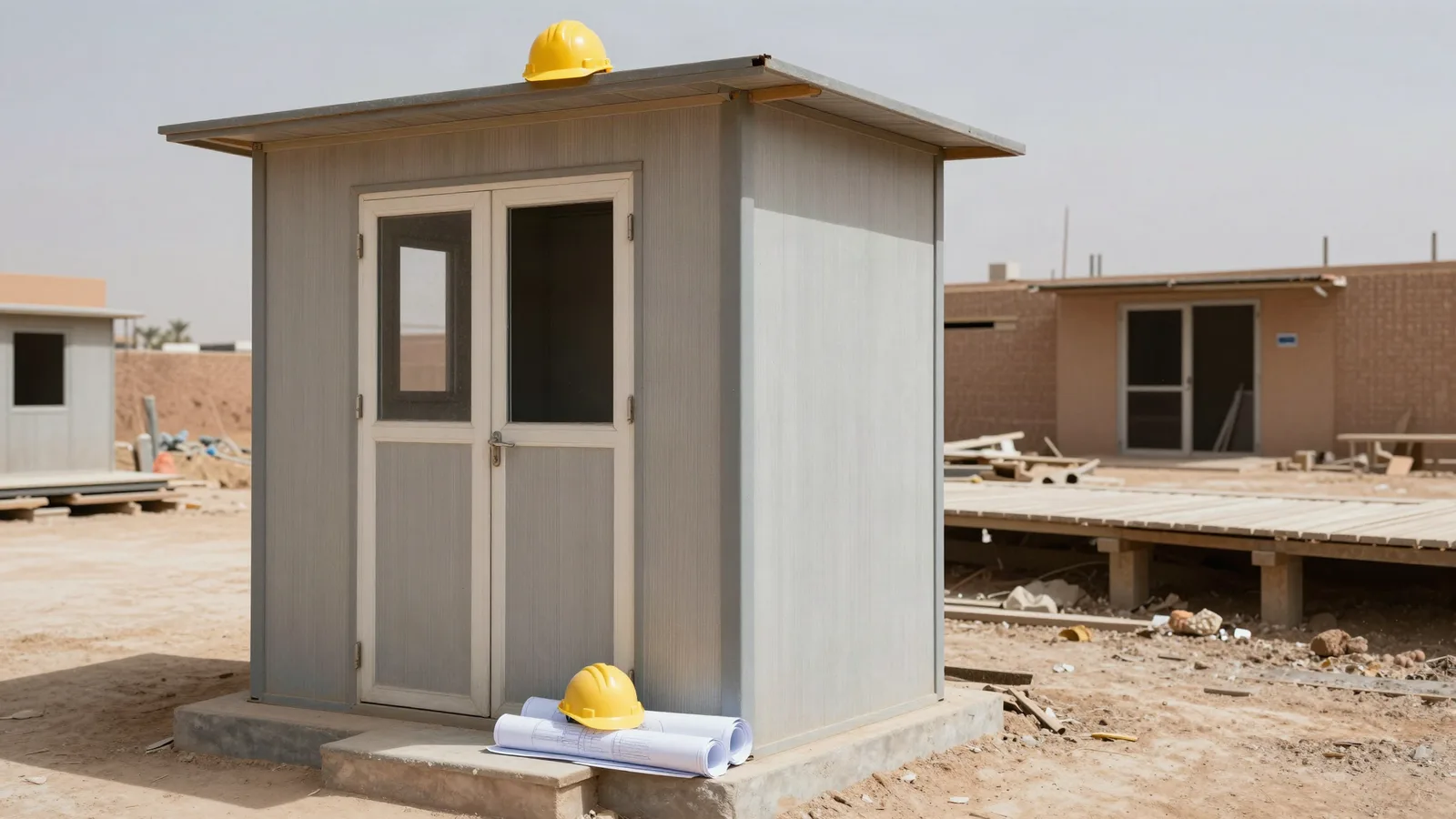
1. A property apart: neither bare land nor a finished home
The unfinished building is one of the cases where owners most often get value wrong. Many add up the land and what they have spent. Others compare with a finished villa in the neighbourhood and forget everything that is missing. Neither is market value.
A buyer does not pay your costs: he pays for what the property, in its current state and with its uncertainties, will allow him to achieve. He still has to finish the site, find contractors, wait and absorb surprises. The appraiser's report turns that reasoning into a written method.
2. Progress as the appraiser describes it
The appraiser describes what he sees, by component and by level. This is a progress record, not a technical diagnosis: he does not look for structural defects and does not rule on the quality of the work. If he sees a visible anomaly, he flags it; a structural study is a job for an engineering firm.
- Levels built: foundations, slabs, columns, walls, roof or terrace, stairs.
- What is closed or open: windows, doors, boundary wall, weathertight or not.
- Services: connections in place, stubs left, or nothing.
- Finishes: rendering, floors, joinery, plumbing, electrics, or none.
- Built areas measured on site and compared with the permitted plans.
- Age of the works and how long they have been stopped, where that can be drawn from the site or the documents.
This record is the base for everything else: without precise progress, neither the cost to complete nor the final value can be justified.
3. The building permit: still valid or not
The permit determines what a buyer can finish, and on what terms. The appraiser asks for the building authorisation and the permitted plans, then compares:
- Is what has been built consistent with the permitted plans (levels, footprint, areas)?
- Is the permit still valid, or has the period set by urban planning rules run out?
- Did the works stop before or after a change to the applicable development plan?
- Is there a gap (an extra level, a wider footprint) that will have to be regularised before completion?
We quote no validity period: it comes from the urban planning rules in force and is checked with the municipality. If the permit is no longer valid, or the building departs from it, the appraiser says so and carries it into his assumptions: a buyer may have to file a new application, with the uncertainty that brings.
4. The method: value after completion, minus cost and risk of completion
The logic is simple, and each step is written into the report:
- 1. Value of the completed property. That of a property of the same type, location and finish, established by comparison with sales of finished properties.
- 2. Cost to complete. The cost of the remaining works, drawn from the progress record and priced from sourced market rates, trade by trade. This is a valuation estimate, not a contractor's quote.
- 3. Completion risk. What a buyer deducts for delay, site uncertainty, conformity with the permit and managing the works. There is no single rate: the report explains the reasoning and its assumptions.
- 4. Value as it stands. The completed value, minus the cost to complete, minus the risk. This is the single value retained.
That result is then compared with the land alone and with a cost approach (what has been built, depreciated). If the three approaches diverge widely, the report explains why rather than averaging them. The approach is close to the one in our article on estimating a property price: methods and reliability.
5. A narrow buyer market
Few buyers look for an unfinished building. Some want to finish to their own taste, others to finish fast and resell or let. Buyers, whether they borrow or pay cash, hesitate in the face of uncertainty. Consequences:
- the time to sell is longer than for a finished property;
- the price depends heavily on the buyer profile: a neighbour, a developer or a private buyer do not value the same things;
- progress and conformity with the permit weigh more in negotiation than on a finished property.
The report mentions this market effect without putting a blind number on it: it relies on what comparable sales and observed offers allow it to say.
6. Three frequent situations
- Inheritance. The deceased left a halted building site. Heirs need the value as it stands to share, buy out a share or sell. See our page on property appraisal for inheritance.
- Halted works. For lack of funds, permit or agreement between partners, the owner wonders whether to finish, sell as is or sell the land with the building. Comparing the two values (as it stands, after completion) helps decide.
- Owner living abroad. The building was started from abroad, sometimes with remote supervision. A neutral record of progress is useful to decide. See our article on building a house in Morocco with remote supervision.
7. Two frequent mistakes
Overvaluing what is built. The shell is part of the cost, but a buyer does not pay for it at what it cost. He pays the value of the finished property minus what he still has to spend.
Underestimating the cost and duration of finishing the site. Finishing trades, connections and fit-out weigh heavily, and every month of stoppage adds uncertainty. The report prices the remaining cost trade by trade from sourced market rates and writes the timing assumptions.
In both cases the appraiser gives no range: he retains a single value and writes what justifies it. If you hesitate between finishing and selling, ask for both values (as it stands and after completion): comparing them informs the decision.
8. When to have it valued: before finishing or before selling
The right moment depends on the decision to take. Before resuming the works, the valuation shows whether the remaining works create more value than they cost: the value as it stands is compared with the value after completion, allowing for risk and time. Before selling as is, it gives a reasoned price that avoids starting too high, with the risk of a property that does not sell, or too low out of fatigue.
In an inheritance or between partners, it provides a common basis to split or buy out a share. In every case, the earlier progress is documented (dated photos, plans, permit, invoices), the stronger the value: a site halted long ago loses its traces, and the appraiser then has to set more assumptions.
For a villa, appraisal starts at 5,000 MAD excl. VAT; for a building, the quote depends on its size and degree of progress. The quote is firm and delivered within 24 hours.
9. Checklist before selling or buying
- Up-to-date land title and identity of the owner or owners.
- Building authorisation and permitted plans, with their date.
- Record of what is built, level by level, compared with the plans.
- List of existing finishes and connections in place.
- Cause and length of the stoppage.
- Estimated cost to complete by trade, with sources.
- Value of the completed property and value as it stands, with written assumptions.
10. FAQ
Is a shell-stage building worth the land plus what I spent?
No. A buyer does not reimburse costs: he pays for what the property, in its state, will allow him to achieve after finishing the site. Value is derived from the completed value, minus the cost and risk of completion.
Does the appraiser carry out a technical diagnosis of the structure?
No. He describes progress and flags a visible anomaly, but does not carry out a structural study or search for defects. That is a job for an engineering firm.
My permit is old: does it change the value?
Yes. The permit determines what can be finished. If it is no longer valid or the building departs from it, the buyer may have to regularise or re-apply. The validity period comes from urban planning rules and is checked with the municipality.
Is it better to finish before selling?
It depends on the cost to complete, your ability to fund it and the time involved. Having the property valued under both assumptions (as it stands, after completion) lets you compare properly.
Can an unfinished building be valued in an inheritance?
Yes. The appraiser describes progress, checks the permit and sets a value as it stands, usable for partition or sale, documented and verifiable line by line.
How much does valuing a villa or building under construction cost?
From 5,000 MAD excl. VAT for a villa, firm quote within 24 hours, report in 5 to 8 working days (48-72 h express with a surcharge). The quote depends on the type and size of the property.
A halted, inherited or remotely started building? Have the value as it stands established.
RICS-certified experts. Progress record, permit check, completed value minus cost and risk of completion: a report documented and verifiable line by line. Firm quote within 24 hours.
Related articles
Note: The progress described in a report is a record, not a technical diagnosis. Permit validity and any regularisation fall under urban planning rules and the municipality. To have your property valued, see our real estate appraisal page.