
Pricing the plots or units of a property development in Morocco
A price for every plot or apartment, under a rule anyone can read: a base price drawn from the market, reasoned coefficients, a list price and a negotiation floor.
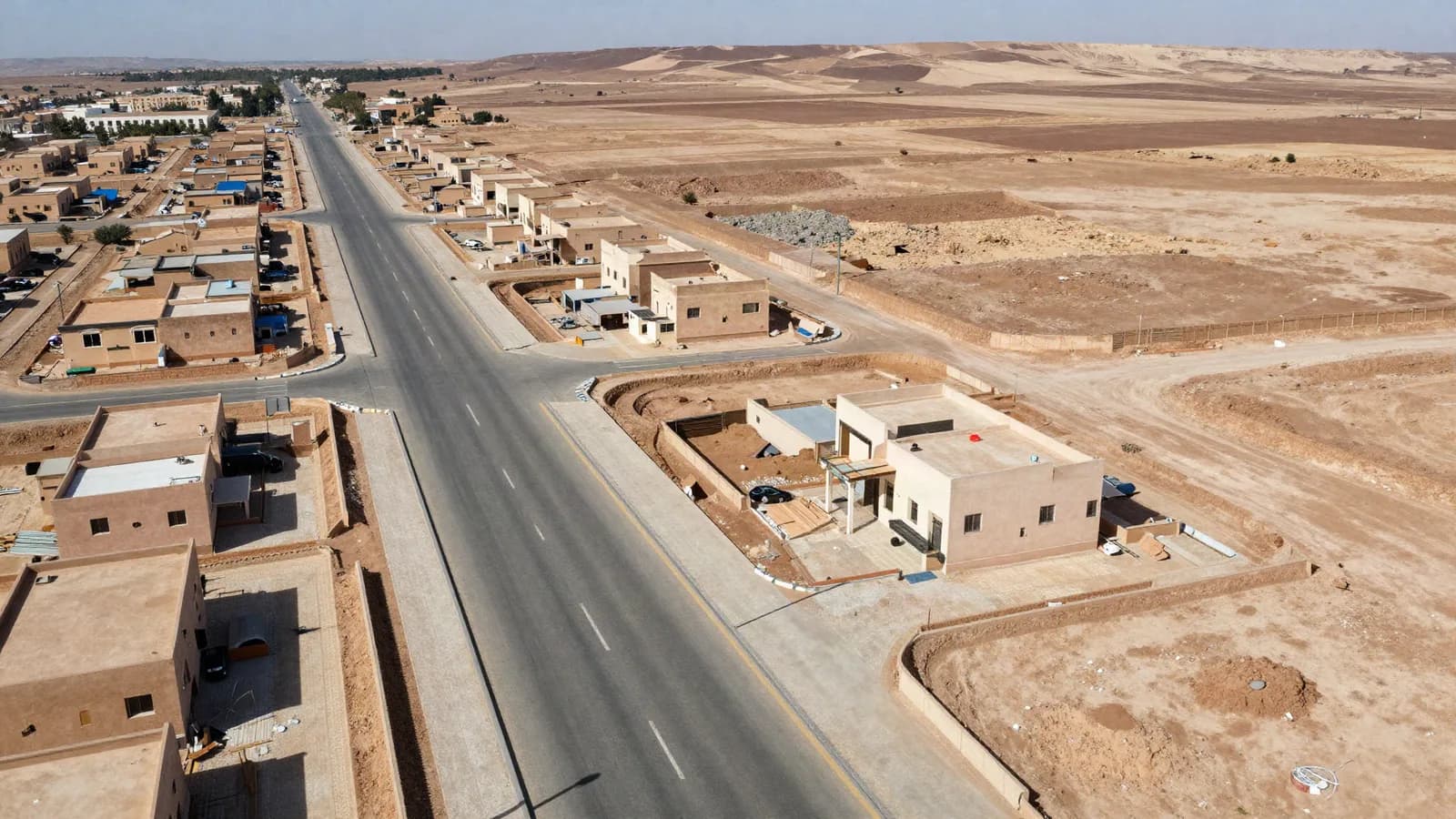
A subdivision of a hundred plots means a hundred prices to set. Too high, and sales stall while holding costs run. Too low, and the lost revenue is never recovered. Uniform, and the best plots go within weeks while the weaker ones stay in stock.
Pricing answers this with a grid: each unit receives a price derived from a market base and written coefficients. It builds on the market study of the project, which supplies the reference price.
The starting point: approved specifications and base price
For a subdivision, the grid starts from the approved specifications (the cahier des charges) and the layout plan. That document sets the use, area and building rights of each plot. It is the reference for marketing; the development plan comes in support. The legal framework for selling plots is covered in our analysis of Law 34-21 on subdivisions.
Plots are grouped into families: villas, apartment buildings, retail. Each family receives a base price per square metre, drawn from recorded sales, listings and the competition survey. Plots that are not for sale (transferred public facilities, technical structures, roads) are taken out of revenue at this stage.
Coefficients, plot by plot
The base price is then adjusted for each plot according to what sets it apart from its neighbours:
- corner position or double frontage;
- width of the road it faces;
- view or proximity to green space;
- proximity to a public facility;
- shape and size of the plot;
- nuisance: transformer, noisy road;
- position within the phase.
The formula fits on one line: plot price = base price × product of coefficients × area.
Illustrative example, teaching figures only. Base of MAD 5,000 per sqm, corner plot (coefficient 1.08) on a wide road (1.04), area of 200 sqm: 5,000 × 1.08 × 1.04 × 200 = MAD 1,123,200. These values are there to show the calculation. Actual coefficients are calibrated on the project's market and justified one by one in the method note. The guide to pricing subdivision plots goes through each criterion.
Two prices per plot: list and floor
Each plot carries two prices. The list price is the one used in sales material: the top of what the data can support. The negotiation floor corresponds to the expected market value. The gap between the two is the negotiation margin, accepted and known to the sales team. Without a written floor, every discount is decided case by case and the grid loses its consistency.
Apartment schemes: what changes
The logic is the same; the criteria differ. The first step is to state which reference area is used: titled area, living area, or an area weighted for terraces and gardens. A price per square metre only means something when set against the same area as the comparables.
The grid then covers floor level (with or without a lift), orientation and sunlight, view, position (corner, street side, courtyard side), unit type, terrace, private garden, top floor. Parking and storage are priced separately. Prices are set by phase: launch, during construction, completion. See the guide to pricing apartments in a new development.
The check against the appraisal
The sum of the grid is the revenue of the scheme. It must reconcile with the assumption in the developer appraisal. If it does not, either the grid or the appraisal is corrected, knowing which of the two was wrong.
For apartment-building and retail plots, a second check applies: the buyer's own residual calculation. The plot price has to remain compatible with the appraisal of the developer who will buy it, that is, with the revenue of the building that can be built, less costs and margin. The developer feasibility calculator lets you rerun that test.
Running the sales programme
- Order of release by phase, so the best plots are not exhausted first.
- Price review rule tied to the observed pace, written in advance.
- Unit-by-unit tracking: available, reserved, sold, with cumulative revenue.
How the engagement runs
1. Documents to provide.
- the subdivision layout, or the sales plans of the scheme;
- the approved specifications;
- the schedule of plots or apartments, with areas;
- the progress of works and, where relevant, sales already concluded.
2. Site visit. We visit the site, then the competing subdivisions and schemes in the area: list prices, specification, progress, visible stock.
3. Analysis. Base price, calibration of coefficients, construction of the grid, check against the appraisal.
4. Presentation. The grid is presented and discussed with you. Coefficients are reasoned choices; you can challenge one, and the grid recalculates.
What you receive
- The price grid, plot by plot or apartment by apartment, in a workbook where every coefficient is visible and editable.
- The plan colour-coded by price level.
- The method note: sources, base price, justification of coefficients, review rule.
- The sales tracking sheet.
Fees
Fees are quoted case by case, according to the number of units and the scope: market study already available or to be carried out, number of product families, extent of the competition survey.
The limits of the exercise
- A grid does not create demand. It distributes an average price that the market has to accept.
- Coefficients are not universal. A corner premium observed in one area does not carry over unchanged to another.
- The grid ages. It is right at its date; the review rule keeps it current as sales reveal the market.
- It guarantees neither the sales nor their timing. It gives the sales team a consistent rule and a floor.
The grid rests on a reference price. How that price is established is set out on the page market study and pricing for property development in Morocco.
FAQ
Is a market study needed before pricing?
Yes. The base price of the grid comes from the market study. If you already have one, we review it and update it where needed; otherwise it is carried out within the same engagement.
Are the coefficients the same for every subdivision?
No. They are parameters calibrated on the project's own market, from the price differences observed in the area. Each coefficient is justified in the method note and stays editable in the workbook.
What is the difference between the list price and the negotiation floor?
The list price is the one shown in sales material. The floor is the expected market value, below which a sale is no longer consistent with the grid. The gap between the two is the accepted negotiation margin.
Can a subdivision already on sale be repriced?
Yes. Sales already concluded become data: they show which plots sell and at what price. The grid for the remaining plots is recalibrated on that evidence.
Which documents are needed?
The subdivision layout or the sales plans, the approved specifications, the schedule of plots or apartments with their areas, and the progress of works. A visit to the site and to competing schemes completes the file.
How much does the engagement cost?
It is quoted case by case, according to the number of units and the scope. The quote lists the deliverables and what is included.
Related reading
- Absorption rate of a development: measuring and phasing
- Development market study: method, sources, comparables
- How much is my land worth to a developer
- Local taxes on subdivision and construction
- Land valuation in Morocco
👉 Our service : market study and pricing for property development in Morocco.
📚 All our articles : real estate insights.
A price grid to build?
Send the layout, the approved specifications and the schedule of units. The quote is set according to the number of units and the scope.
Request a quote →